
Learners with dyslexia often show powerful creative and cognitive strengths, from visual-spatial reasoning to big-picture problem-solving and storytelling. These are authentic abilities that shape how they learn, think, and communicate. When instruction recognizes and builds on these strengths, confidence and motivation grow.
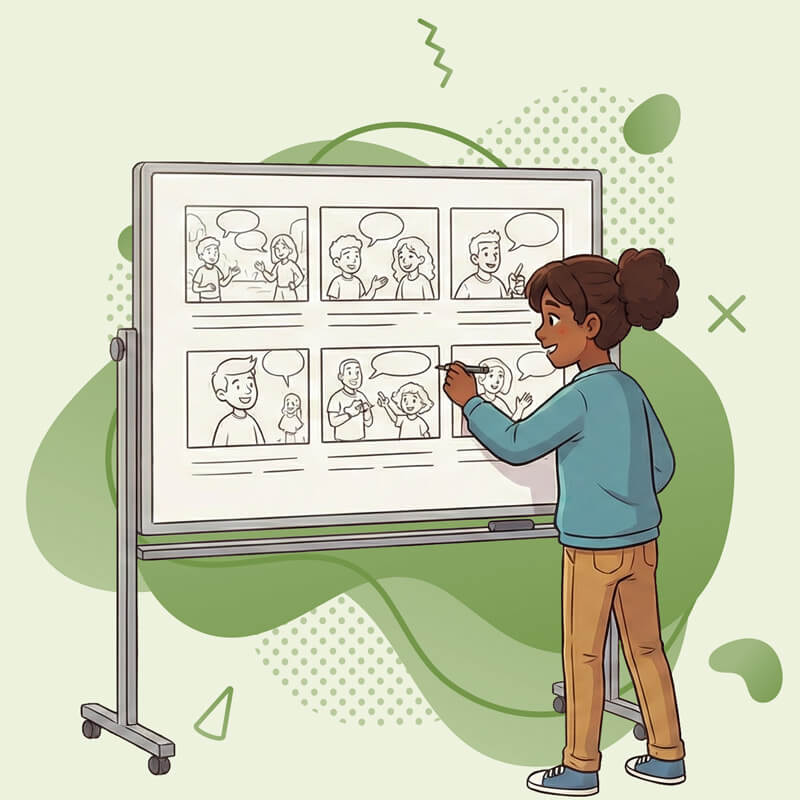
Learners with dyslexia, ADHD, executive-function differences, and other learning profiles often demonstrate meaningful strengths alongside areas of vulnerability. A strengths-based perspective does not minimize difficulty; it provides a scientifically sound way to interpret learner performance and to design instruction that is effective, sustainable, and psychologically protective over time.
At Phonology Private Tutoring, strengths are treated as instructional assets. We identify and leverage cognitive and linguistic strengths—such as reasoning, creativity, oral language, curiosity, and problem-solving—while directly targeting the specific skills and strategies that underlie reading, writing, and academic endurance.
Learn More: Strengths of Dyslexic Learners
Strengths-based instruction supports motivation because it strengthens self-efficacy: a learner’s belief that effort and strategy use can produce improvement. When learners experience consistent progress and see their strengths recognized, academic identity shifts from avoidance and helplessness to agency and strategic engagement.
This matters because identity and learning are intertwined. Learners who repeatedly experience failure often begin to interpret difficulty as evidence of low ability. In contrast, when instruction is explicit, progress is visible, and strategies are taught systematically, learners develop resilience, persistence, and a more accurate, self-respecting understanding of their profile.
Bilingual and multilingual learners may show reading or writing patterns that resemble a learning difficulty but are better explained by language exposure, vocabulary development, or cross-linguistic transfer. Accurate interpretation requires careful attention to linguistic history, opportunities to learn, and performance patterns across languages when possible.
Instruction is most effective when it is linguistically responsive: it builds on existing knowledge, makes cross-language connections explicit, and embeds vocabulary and language scaffolds into reading and writing tasks.
Learn More: Bilingual & Multilingual Learners
When concerns arise, families benefit from a clear, non-alarmist pathway that replaces uncertainty with direction:
Observe → Assess → Understand → Support
Learn More: Next Steps for Families
Self-Regulated Strategy Development (SRSD) is a well-researched framework for writing instruction that integrates explicit strategy instruction with self-regulation processes such as goal-setting, self-monitoring, and reflective evaluation. SRSD strengthens writing quality, organization, and motivation by making the writing process predictable, teachable, and increasingly independent.
At Phonology Private Tutoring, SRSD is implemented as a signature instructional framework, with adaptations for learner profile, developmental level, and bilingual/L2 contexts.
Learn More: SRSD Writing Instruction
Learners make stronger progress when the adults around them share a common understanding of the learner profile and the instructional plan. For this reason, support is provided at multiple levels:
Look for persistent challenges in literacy, attention, or organization.
A psychoeducational evaluation clarifies why learning is difficult.
We translate assessment data into actionable insights.
Evidence-based intervention and self-regulation tools address the learner’s needs.
Small, sustained improvements build motivation and long-term success.
Every learner deserves instruction that reflects their unique strengths and needs. Connect with us to explore the right next steps for dyslexia and learning support.