
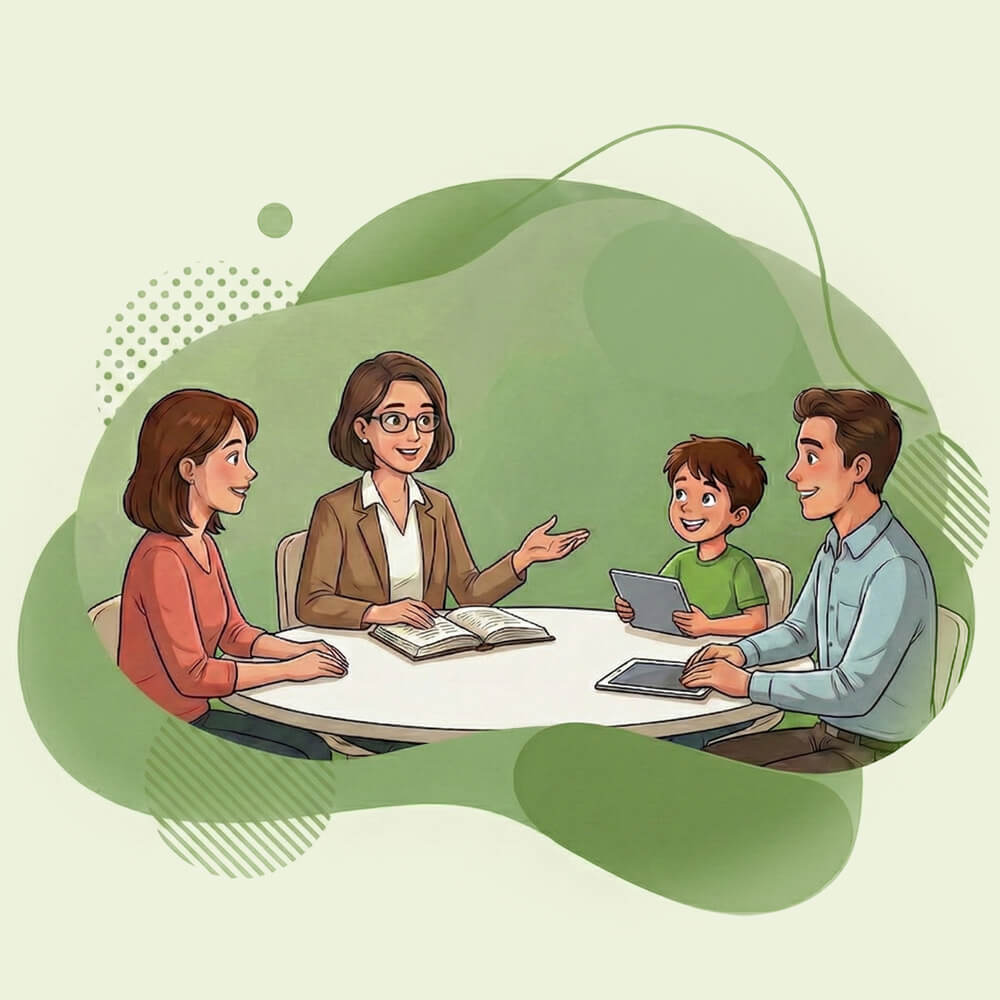
We outline developmentally appropriate indicators of reading, writing, attention, and organization challenges to help families distinguish typical variation from patterns that warrant investigation.
We provide accurate, strengths-based language, for example:
Such explanations reduce confusion and worry while maintaining a sense of competence.
Family-friendly strategies include shared reading, audiobooks, word-play and conversation routines, structured homework systems, and praising strategy use and persistence.
We support parents in interpreting assessment findings, preparing for meetings, clarifying accommodations, and maintaining calm, collaborative advocacy.
We address the emotional landscape around learning differences, including frustration, worry, and self-esteem, and support families in building realistic optimism and persistence.
We teach students how to break tasks into manageable steps, use simple planning tools, and build work stamina gradually.
Students learn strategic tools such as text-to-speech when appropriate, graphic organizers, structured note systems, chunking, and retrieval practice.
We normalize distraction, procrastination, and anxiety and teach practical strategies such as timed work periods, planned breaks, small goals, and regulation tools (breathing, reframing, self-talk).
We recommend school-appropriate tools for reading, writing, organization, and time management, with emphasis on strategic use rather than shortcuts.
Students learn to monitor progress, reflect on what helps, and see themselves as active, strategic learners.
We emphasize practices that support a wide range of learners: clear routines, explicit modelling, multimodal supports, and structured task design.
Teachers can integrate self-regulation by stating goals and success criteria, modelling planning and monitoring, and using brief reflection prompts before and after tasks.
Examples include flexible response formats, visual supports, extra processing time, and structured templates that maintain expectations while reducing unnecessary barriers.
We recommend strategies for organization, task initiation, time management, and feedback that targets process as well as product.
Collaboration improves consistency. We provide communication strategies for coordinating with families, tutors, learning support teams, and clinicians.
Every learner deserves instruction that reflects their unique strengths and needs. Connect with us to explore the right next steps for dyslexia and learning support.